The Nigerian currency, naira has hit an all-time low after exchanging for N530 against the dollar, at the parallel market on Thursday.
The local currency, which stood at 526/$1 on Tuesday, fell to 530/$1 at the parallel market on Thursday from 528/$1 on Wednesday.
The naira dipped to 720 against the pound at the parallel market from 717/£1 on Wednesday, while the euro rose to N620 from N616 on Wednesday.
At the I&E window, the naira weakened further to 411.67/$1 on Thursday from 411.50/$1 on Wednesday, according to FMDQ Group.
No less than 55 per cent to 60 per cent of Nigerian forex transactions are traded at this window, which is used by the CBN and most exporters and investors, according to Financial Derivatives Company (FDC) Limited.
“It serves as not only a source of price discovery but also a barometer for measuring potential and actual CBN intervention in the market. Some of the exchange rate determinants are balance of payments, capital inflows and trade balance,” the FDC said.
MoneyNewsAddThis : Original Author : SaharaReporters, New York Disable advertisements :
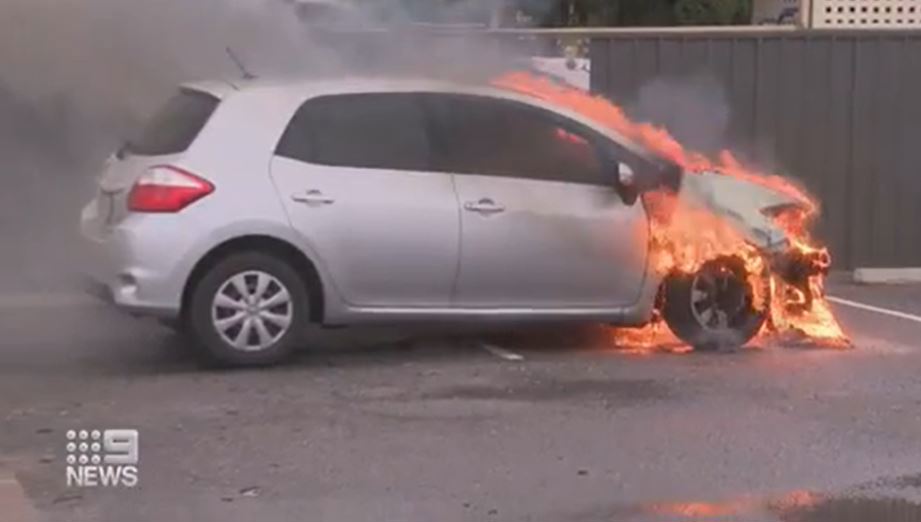
A driver was forced to flee her burning car when the Toyota Corolla erupted in flames during Adelaide's morning commute.
The car ignited on Marion Road, South Plympton just after 7.30am, with the woman forced to pull over into a carpark and jump clear as witnesses rushed over to check on her and help try and put the fire out.
"The flames grew and the fire got bigger and a couple of popped tyres with the young fella hanging over the fence trying to put it out, was a bit scary," witness Steve Troy told 9News.
Firefighters arrived a short time later and extinguished the flames.
An engine fault is believed to be the cause of the fire and the car was completely destroyed.
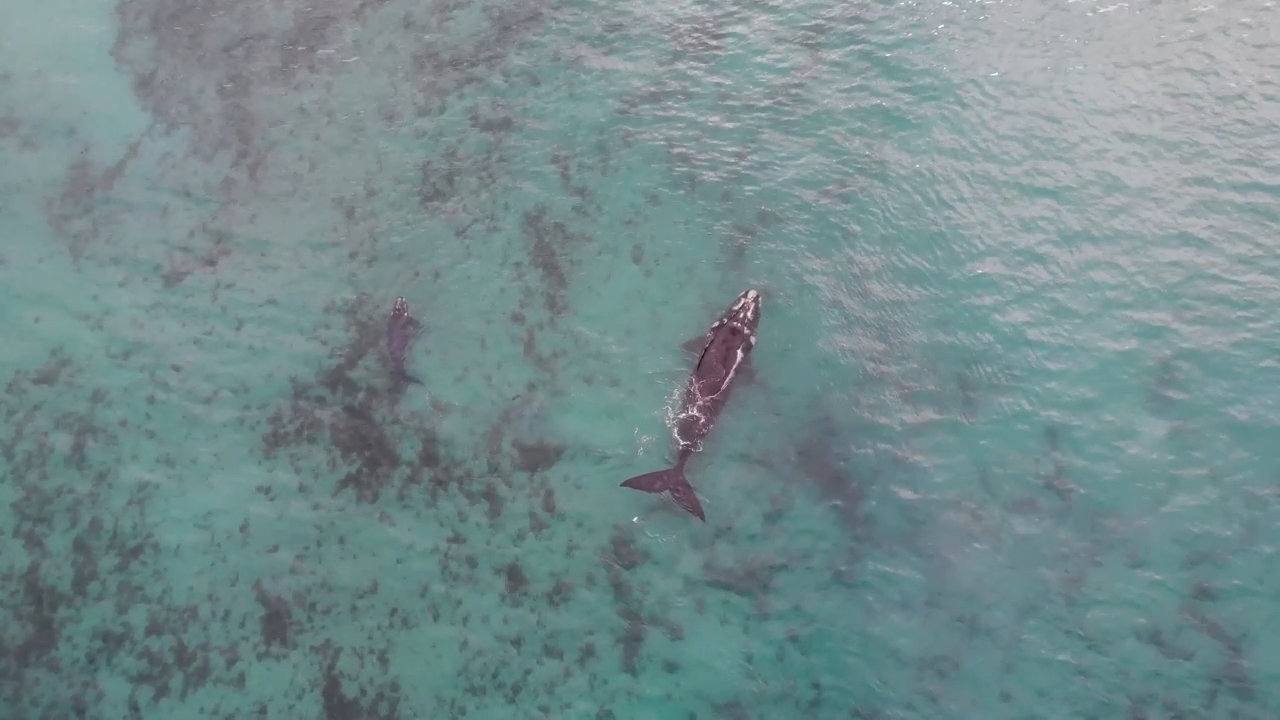
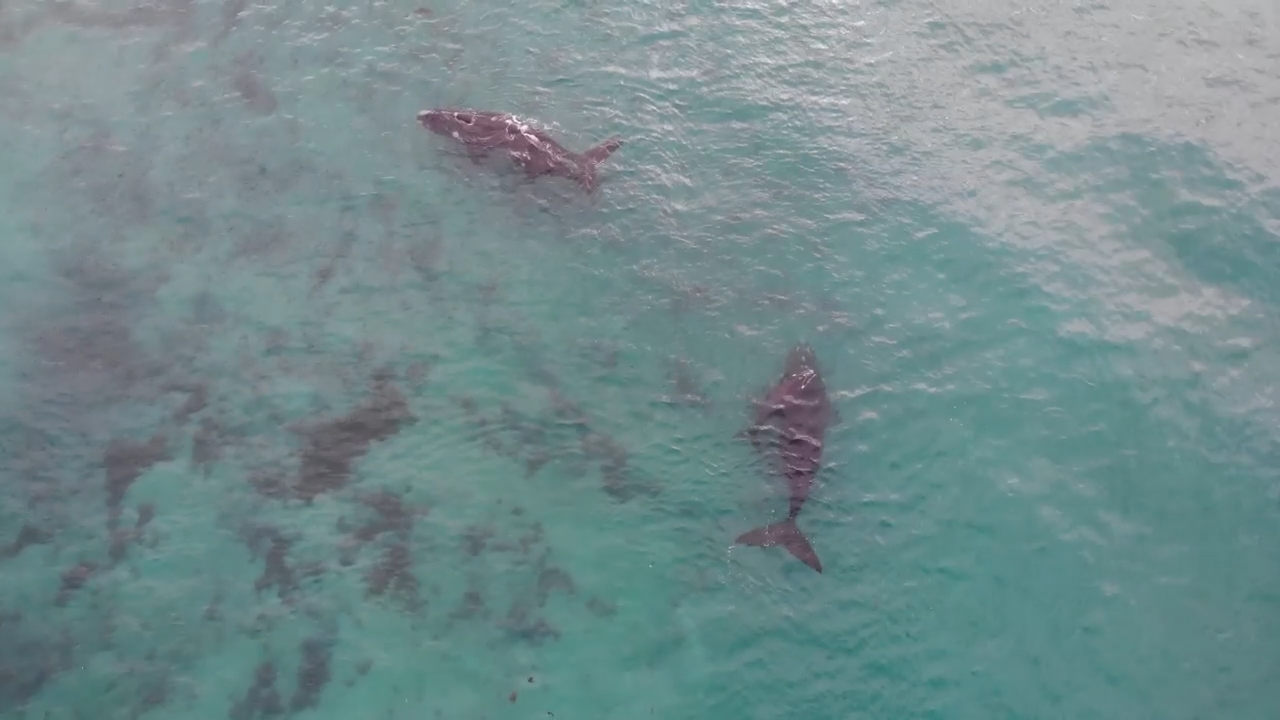
Rare footage of two female Southern Right Whales and their calves resting along the New South Wales South Coast has been captured by the Organisation for the Rescue and Research of Cetaceans in Australia (ORRCA) member Daryn McKenny.
Both calves didn't stray far from their mothers as they leisurely swam in the teal waters.
One of the calves rested themselves on its mothers back before returning to be by her side.
Distinct white marks known as callosities were spotted on the whales. The shape and pattern of the callosities are unique to each Southern Right whale as the patterns stay with them from birth.
A pod of dolphins also joined the whales, leaping and diving close by.
Despite being solitary mammals, Southern Right Whales occasionally migrate in pairs as shown in the footage. They swim slowly and don't remain in one place for a long period of time.
The whales have been spending a few days resting before recommencing their migration to the southern waters of the Southern Ocean for feeding.
Using the word 'mate' in conversation has been found not increase trustworthiness, a new study reveals.
The study, published in Human Ethology, has revealed people without an Australian accent are considered less trustworthy.
The author of the study, Dr Cyril Grueter from University of Western Australia's School of Human Sciences, said his research team set out to find out why Australians frequently interjected their conversations with the salutation 'mate' and if using the cultural idiom fortified connections between people.
Dr Grueter and his colleagues also researched whether Australians discriminated against speakers with accents other than Australian-English.
"We were specifically interested in the situation in Australia where you can hear all sorts of accents and it's customary to use the term 'mate' to address people," Dr Grueter said.
Dr Grueter also added that accents were "a pertinent social marker and can shape group preferences; non-native speakers are often perceived less positively than native speakers in domains such as integrity and solidarity."
Researchers conducted a psychological experiment that involved the recording of six speeches by three male speakers, which were differentiated by accent and use of the word 'mate'.
Kabirat Olokunde, a Nigerian migrant worker, planned to spend her birthday with friends in the city of Abu Dhabi. Instead, she turned 28 in a frigid prison cell, one of about 700 Africans imprisoned by Emirati authorities without charge.
In unparalleled mass arrests, the workers were jailed with "no legal justification" on the night of June 24-25, and later started being deported, said ImpACT International for Human Rights Policies and the Euro-Mediterranean Human Rights Monitor.
UAE flag flies over a boat at Dubai Marina, Dubai, United Arab Emirates May 22, 2015.REUTERS/Ahmed Jadallah "I celebrated my birthday in chains, with no mattress," Olokunde told Thomson Reuters Foundation by phone from the Lagos, Nigeria, where she was deported on August 3.
"I still have the trauma in me," added the single mother, who had been working as a bus attendant and caretaker at an international school in Abu Dhabi.
She was deported without access to her belongings, and is now jobless and unable to support her son, siblings and parents.
The Abu Dhabi government communications office, and the Nigerian embassy in Abu Dhabi, did not immediately respond to requests for comment on the rights groups' report, published on Thursday.
The Gulf monarchy, a regional trade and tourism hub and one of seven emirates which form the United Arab Emirates (UAE), tolerates little criticism.
Human rights groups have previously documented the imprisonment of hundreds of activists, academics and lawyers in the UAE, often following unfair trials on vague charges. The UAE has dismissed those accusations as false and unsubstantiated.
The UAE is home to nearly 10 million people, more than 80% of whom are expatriates who send remittances home to their families, according to the United Nations.
Workers from developing countries often live in shared residencies in Abu Dhabi with separate wings for different nationalities, like La Gym, where Olokunde was arrested. African and Asian workers have highlighted stigmatisation and racism in the past, but the two rights groups said the June raid was a marked escalation.
"The scale of this racially motivated deportation is completely unprecedented," said Michela Pugliese, a migration researcher at Euro-Med Monitor.
"The victims and other migrants who aspire to work safely in the UAE have had this right unjustly revoked. Its consequences will be felt for years to come."
The investigation, based on interviews with more than 100 migrant workers, found that Abu Dhabi's Rapid Intervention Forces (SWAT), Criminal Investigation Department and police carried out mass arrests in at least four apartment buildings.
The subsequent forced deportations were illegal, Pugliese said, as many of the workers had valid residency permits and work visas and were denied due process or access to their personal property.
About 100 individuals remain in detention, and more African workers have been arrested in recent weeks, Pugliese added.
The two human rights groups said they sought clarification from the UAE interior ministry on the reasons behind the arrests and deportations, but received no response.
Migrant workers told researchers that the arresting units used excessive force against them, including stun guns, and touched women's bodies inappropriately.
Olokunde said she was arrested in shorts and a bra, and was not allowed to dress before being transported to the jail.
When she and other women went on a hunger strike to demand justification for their arrest, they were chained for seven days, including her birthday, Olokunde said.
Two workers who spoke to the Thomson Reuters Foundation said they slept on the floor in large, group cells, but were not given masks to protect against COVID-19 infection.
In jail, the report said, detainees were denied access to health care and sanitary pads while women had their periods.
The rights groups said detainees were not granted access to lawyers or told why they had been arrested - but some were indirectly accused of prostitution, which is a crime in the UAE.
During her single, brief interrogation, Olokunde said she was asked, "How much do you charge for a massage?" According to Human Rights Watch (HRW), migrants are entitled to challenge their arrest in their country of residence.
"The abuses outlined demonstrate that migrants have had their rights to due process violated, and their detention conditions could amount to ill-treatment," said Rothna Begum, HRW's women's rights researcher in the Middle East.
"It is horrific that the UAE authorities appear to be conducting a secret campaign of mass arrests of African migrants, without any clear legal basis for such arrests or detention," she added.
Kenneth Rubangakene, a 31-year-old Ugandan clerk who had lived in Abu Dhabi since 2017, also said he was taken from his La Gym apartment to prison.
He said guards scanned his fingerprints and retinas without explanation, chained his hands and feet for three days, and imitated the sound of a couple having sex, asking if he had ever heard that noise at La Gym.
"They told us Africans are spoiling their country, they want to get rid of Africans from the street, we Africans are stupid," he said.
He was deported from Dubai International Airport on July 29, according to a printed booking confirmation that Rubangakene shared with the Thomson Reuters Foundation, which he said was given to him by prison guards.
"It was so shameful at the airport. You are arriving in a prison uniform, in prison sandals," he said.
The Ugandan embassy in Abu Dhabi did not immediately respond to a request for comment.
Rubangakene said he has about 6,000 dirham ($1,634) stuck in a bank account in the UAE that he cannot access, as his bankcard - along with teaching certifications he would need to apply for new jobs - all remained in his room.
"I came back with nothing. I'm starting from zero," he said.
Human RightsNewsAddThis : Original Author : SaharaReporters, New York Disable advertisements :
Two graduates of Osun State University (UNIOSUN) have been killed in an accident on the Lokoja-Abuja Road.
It was learnt that two others sustained injuries in the accident the graduates had on their way to report at the National Youth Service Corps (NYSC) camps in Kaduna and Kano states.
A 21-day orientation course in camps across the country is part of the requirements for graduates to fulfil to partake in the mandatory one-year service to Nigeria.
It was gathered that three of the graduates were posted on Wednesday by the NYSC to Kaduna State while one was posted to Kano, to undergo the orientation course, when the crash occurred.
The Public Relations Officer of the University, Ademola Adesoji, told The Punch that immediately the accident occurred on Wednesday, the survivor contacted the institution.
“And we immediately informed the management of National Youth Service Corps Scheme.
"Four of our ex students were involved. Three of them are male and one female. Two died in the accident. But we spoke with the two that survived and monitored their movement up to hospital.
"Our Students Affairs Unit also notified the NYSC leadership and the management of the scheme responded immediately. The two that died were heading to Kaduna NYSC Orientation Camp. The four of them travelled in a vehicle they hired from Osogbo," he said.
Adesoji expressed his condolences to the families of the deceased on behalf of the university management.
InsecurityNewsAddThis : Original Author : SaharaReporters, New York Disable advertisements :
A former United States Ambassador to Nigeria, John Campbell has expressed fear that the recently acquired Super Tucano fighter jets may be hijacked by bandits and terrorists.
Mr Campbell relates his prediction to the fall of the Afghanistan government and the takeover of similar high-grade military jet fighter by the Talibans.
The Afghan government had also acquired 23 Super Tucanos from US to combat the Talibans but with the collapse of the Afghan government and the fall of Kabul, not all of the aircraft have been accounted for. Some Afghan pilots flew their planes out of the country. However, at least one Super Tucano is now in the hands of the Taliban.
Mr Campbell who wrote for CFR, explained the instances of how terrorist groups seized other military equipment in Nigeria, expressing worries on whether the aircraft will be used to combat terrorism or used against other targets such as the Biafran agitators or Delta militants.
“Though it seems unlikely at present, there is also the potential that a Super Tucano could fall into the hands of a jihadi terrorist group.
“Now that the Super Tucanos are part of the Nigerian Air Force, an issue will be how they are used. Will they be used only against jihadi terrorists in the North, or will there be the temptation to use them against other targets, such as Biafran separatists, Delta militants, or even cattle rustlers? Broader use increases the potential for civilian casualties.
“A Biafran separatist movement, the Indigenous People of Biafra (IPOB), is suing to block the sale in a Washington, D.C. court,” he said.
Nigeria separatist group Indigenous People of Biafra (IPOB) had sued U.S. Secretary of State Antony Blinken and Defense Secretary Lloyd Austin over the sale of attack planes.
IPOB said the Nigerian government will use the warplanes to attack its supporters.
Also some critics, human rights groups and some members of the U.S. Congress had opposed the sale of the aircraft to Nigeria, citing the constant abuse of human rights by the regime of Muhammadu Buhari.
NAF officially inducted the six A-29 Super Tucano fighter jets on Tuesday, to aid its fight against insecurity in the country. Nigeria was said to have purchased the A-29s at about $500 million through Foreign Military Sales (FMS) programme. The American embassy in Abuja had described it as the largest sale in sub-Saharan Africa.
During the induction ceremony of the Super Tucano jets where journalists were denied entrance, U.S. Department of Defence leaders who were also present said that the “aircraft will assist the Nigerian Air Force in their fight against violent extremist organisations including the Islamic State West Africa Province.”
U.S. is providing $36.1 million in infrastructure as support at the Kanji Air Base, where the Super Tucanos will be housed a statement by the embassy disclosed.
No few than 64 Nigerian pilots have been trained at an American air force base on how to handle the aircraft.
InsurgencyTerrorismNewsAddThis : Original Author : SaharaReporters, New York Disable advertisements :